


Views: 0 Author: Site Editor Publish Time: 2026-04-03 Origin: Site


Is aluminum magnetic? You might be surprised to learn that aluminum isn’t magnetic in the same way metals like iron or nickel are. Understanding the magnetic properties of aluminum is crucial for its applications in industries like construction, electronics, and aerospace.
In this article, we’ll explore whether aluminum is a magnetic metal, why it’s non-magnetic, and how its unique properties impact its use in various industries.
Magnetism is a physical phenomenon that occurs due to the motion of electric charges, producing attractive or repulsive forces. In material science, magnetism refers to the property of certain materials to either attract or repel other materials under the influence of a magnetic field. This occurs when the electrons in a material align in such a way that they generate magnetic forces. Magnetism plays a significant role in various applications, from electromagnets in motors to the magnetic storage of data, making it a fundamental concept in both physics and material science.
There are three primary types of magnetism that describe how materials react to magnetic fields:
● Ferromagnetism: This is the type of magnetism most people are familiar with, exhibited by materials like iron, nickel, and cobalt. Ferromagnetic materials are strongly attracted to magnets, and they can retain their magnetization even after the external magnetic field is removed. These materials have unpaired electrons that align in the same direction, creating a strong magnetic effect.
● Paramagnetism: Materials exhibiting paramagnetism, such as aluminum, are weakly attracted to a magnetic field. This effect is much less noticeable than ferromagnetism. In paramagnetic materials, the magnetic dipoles align with the field but do not remain aligned after the field is removed. Aluminum, while weakly magnetic, does not exhibit the strong magnetic effects that ferromagnetic materials do.
● Diamagnetism: Diamagnetic materials are repelled by a magnetic field. This property is exhibited by materials such as copper, bismuth, and graphite. In these materials, the electron motion induces a small opposing magnetic field when exposed to an external magnetic field. Diamagnetic behavior is typically very weak compared to ferromagnetism or paramagnetism.
Type of Magnetism | Characteristics | Example Metals | Aluminum Behavior |
Ferromagnetism | Strong attraction, retains magnetism | Iron, Nickel | Not ferromagnetic |
Paramagnetism | Weak attraction, no permanent magnetism | Aluminum | Weakly attracted |
Diamagnetism | Weak repulsion from magnetic fields | Copper, Bismuth | Not diamagnetic |
Magnetism has practical implications for various industries, particularly in electronics, construction, and engineering. In electronics, materials with strong magnetic properties, such as iron or steel, are crucial for components like transformers, motors, and magnetic storage devices. For example, aluminum, with its weak magnetic properties, is often used in sensitive electronic components where magnetic interference could cause malfunction. Its non-ferromagnetic nature makes it ideal for heat exchangers and cooling systems like aluminum radiators.
In construction, aluminum's non-magnetic qualities are essential for structural components in buildings where electromagnetic fields need to be minimized, such as in high-rise buildings with aluminum curtain walls. Additionally, aluminum profiles are used in applications where magnetic interference could disrupt electronic devices or machinery, maintaining their function in environments with high electromagnetic sensitivity.
Magnetism also affects material selection in industries such as aerospace and manufacturing, where non-magnetic metals like aluminum are often chosen for parts exposed to strong magnetic fields or when minimizing weight and maintaining structural integrity are crucial.
Aluminum is primarily classified as a non-magnetic metal, meaning it doesn't exhibit the strong magnetic attraction seen in materials like iron or steel. However, it can show weak magnetic effects under certain conditions. This weak magnetism is known as paramagnetism, which is the property where materials are weakly attracted to a magnetic field. Unlike ferromagnetic materials that retain their magnetism, aluminum's magnetic properties are temporary and disappear once the external magnetic field is removed.
Aluminum Profiles, including those used in Aluminum Radiators and Industrial Aluminum Profiles, do not exhibit ferromagnetic behavior. Ferromagnetism occurs in materials like iron, cobalt, and nickel, which have unpaired electrons in their atomic structure, allowing them to be strongly attracted to magnets. In contrast, aluminum has paired electrons, which prevent it from exhibiting the same strong magnetic properties. This non-ferromagnetic characteristic makes aluminum ideal for applications where magnetic interference could be a concern, such as in electronic components or industrial machinery.
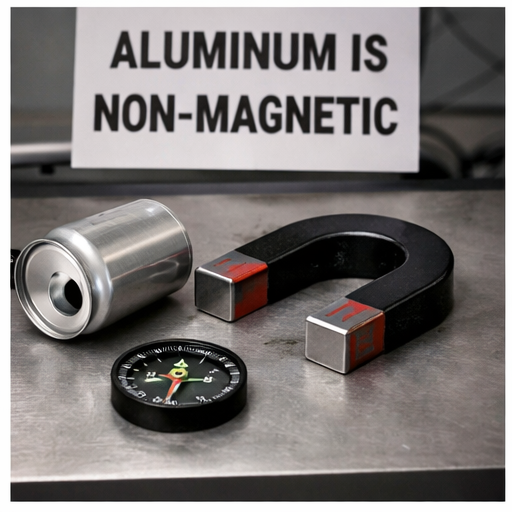
While aluminum itself is non-magnetic, its behavior can be influenced by factors like alloying elements and external conditions. When combined with other metals, such as in aluminum alloys, the material may exhibit slightly different magnetic properties. For example, certain aluminum alloys can show stronger paramagnetic effects due to the presence of different elements, such as copper or manganese, which can alter the material's electron structure. Furthermore, the temperature can also affect aluminum’s magnetic response. At very low temperatures, aluminum may exhibit more noticeable magnetic behavior, though it will still remain far less magnetic than ferromagnetic materials.
This variability in aluminum’s magnetic properties is an important consideration in industries that require precise material specifications, like aerospace or high-performance electronics.
Aluminum’s atomic structure is key to understanding its lack of strong magnetic properties. Each aluminum atom contains three electrons in its outer shell, which are loosely bound and are free to move. This results in a relatively low level of magnetic susceptibility, meaning that aluminum does not easily align its atomic magnetic moments in the presence of an external magnetic field. Unlike ferromagnetic materials, such as iron, where unpaired electrons align to create strong magnetic forces, aluminum's electron configuration prevents this type of alignment, rendering it non-magnetic in most situations. Therefore, while aluminum can interact weakly with magnetic fields, its atomic structure prevents it from becoming magnetized.
Iron, nickel, and cobalt are examples of magnetic metals that differ significantly from aluminum. These metals are classified as ferromagnetic, meaning they have unpaired electrons in their atomic structure that can align when exposed to a magnetic field, resulting in a strong magnetic effect. In contrast, aluminum’s electron configuration leads to a weak magnetic interaction. For instance, in iron, the magnetic moments of individual atoms align and remain aligned, even when the external magnetic field is removed. This difference in atomic behavior is why aluminum is fundamentally non-magnetic and does not exhibit the same strong magnetic attraction seen in ferromagnetic materials like iron.
The non-magnetic nature of aluminum makes it particularly useful in industries where magnetism can interfere with performance. For example, in Aluminum Profiles for Windows and Doors, aluminum's lack of magnetism ensures that there is no unwanted interaction with nearby electronic devices or magnetic fields. Similarly, Aluminum Curtain Walls used in modern architecture benefit from aluminum’s non-magnetic properties, making it an ideal material for constructing building facades that do not interfere with nearby electronic equipment. These applications highlight the practical advantages of aluminum's magnetic neutrality, making it a reliable choice for both construction and industrial environments where minimizing magnetic interference is crucial.
Industrial Aluminum Profiles are widely used in machinery and frames due to their light weight, strength, and non-magnetic properties. In manufacturing and mechanical applications, aluminum's resistance to magnetic fields ensures that there is no interference with sensitive equipment like motors and electrical circuits. These profiles are found in a variety of settings, from factory machinery to automation systems. In architecture, Aluminum Curtain Walls are commonly used for commercial buildings, providing structural support for glass facades while maintaining aesthetic appeal. The non-magnetic nature of aluminum makes it an ideal choice in these applications, as it does not disrupt electrical systems or sensitive devices within buildings.
Aluminum Radiators are essential components in electronics, particularly in heat dissipation systems. Aluminum’s non-magnetic properties make it a suitable material for managing heat in electronic devices like computers, power supplies, and telecommunication equipment. These radiators efficiently absorb and dissipate heat without interfering with the device's magnetic components. The use of aluminum ensures that the heat management system does not introduce any additional magnetic fields that could disrupt the functionality of sensitive electronic components, making aluminum a preferred choice in the electronics industry.
In construction, the non-magnetic properties of aluminum provide significant benefits, particularly in Aluminum Pergola systems and Aluminum Fence components. Aluminum Pergolas are often used in outdoor spaces, offering durability and resistance to corrosion while maintaining a non-magnetic profile that does not interfere with nearby electronic systems or signals. Similarly, Aluminum Fences provide a sturdy, lightweight solution for boundary walls and landscaping, ensuring that no magnetic interference affects nearby electrical systems or machinery. The combination of aluminum’s lightweight nature, corrosion resistance, and non-magnetic characteristics makes it a versatile and reliable material for various construction applications.
Aluminum and magnetic metals, such as iron or nickel, exhibit significant differences in functionality and durability due to their distinct properties. Aluminum Profiles are widely used in construction and manufacturing because of their lightweight nature, high strength-to-weight ratio, and resistance to corrosion. These characteristics make aluminum an ideal choice for architectural elements, like Aluminum Curtain Walls, where durability is essential, but magnetic interference is not desired. In contrast, magnetic metals, such as iron, are preferred in applications that require a strong magnetic field, like motors or electromagnetic devices. While aluminum may not offer the same magnetic capabilities, its non-corrosive properties and ability to withstand harsh environments make it a superior option in many applications.
Magnetic metals, such as iron and nickel, are essential in industries where strong magnetic fields are necessary. They are widely used in motors, transformers, and electrical components where their ability to hold and transfer magnetic forces is crucial. In contrast, aluminum is often chosen for applications where the presence of magnetic fields would be detrimental. For instance, aluminum is used in electronic enclosures, heat exchangers, and aerospace components because it does not interfere with the operation of sensitive electronic systems. The non-magnetic nature of aluminum ensures that it can be used in environments where electrical or mechanical interference needs to be minimized, highlighting its versatility in modern industries.
While aluminum is generally non-magnetic, it is theoretically possible to induce a magnetic response under specific conditions. Magnetizing aluminum requires an external magnetic field, which can temporarily align the electron spins of the aluminum's atoms. However, aluminum remains weakly paramagnetic, meaning its magnetic response is weak and temporary. Unlike ferromagnetic metals, aluminum does not have the intrinsic ability to retain magnetization once the external magnetic field is removed. This is why aluminum is not naturally magnetic and cannot be made strongly magnetic without changing its structure.
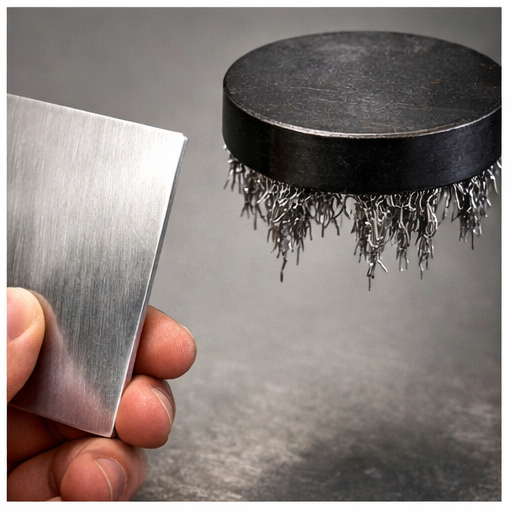
Certain aluminum alloys can exhibit a slightly stronger magnetic response than pure aluminum. When combined with other metals such as iron, copper, or manganese, these alloys can show a weak paramagnetic or even ferromagnetic behavior in specific cases. The magnetic properties of aluminum alloys depend on the alloying elements, which alter the electron configuration and improve their response to magnetic fields. However, even in these alloys, the magnetic effect is generally much weaker than that of pure ferromagnetic metals like iron, and the aluminum alloys remain largely non-magnetic.
One of the main challenges in magnetizing aluminum products is that aluminum lacks the necessary atomic structure to retain a magnetic field. Unlike iron or nickel, which have unpaired electrons that can form strong magnetic bonds, aluminum's electron configuration prevents it from achieving the same level of magnetization. While it’s possible to magnetize aluminum momentarily under high magnetic fields, it does not stay magnetized. Moreover, the technical difficulties in creating a strong and permanent magnetic field in aluminum products limit its use in applications that require durable magnetic properties. These challenges make aluminum an impractical choice for uses that depend on permanent magnetism.
There are several common myths surrounding aluminum's magnetic properties that can lead to confusion. One of the most prevalent myths is that aluminum can be strongly magnetic under certain conditions. In reality, aluminum is a non-ferromagnetic material, meaning it is not strongly attracted to magnets. While it can exhibit weak magnetic effects (as a paramagnetic material), this is far from the strong magnetic pull observed in ferromagnetic metals like iron. Some believe aluminum can be magnetized, but this is misleading. Aluminum's weak paramagnetism means that it can interact with magnetic fields but does not retain magnetization after the field is removed.
Though aluminum is not magnetic, there are instances where it may appear magnetic due to external factors or environmental conditions. For example, when aluminum objects are placed near strong magnets, they may show a slight attraction or be temporarily affected by the magnetic field. This is because the magnetic field can induce a weak magnetic dipole in aluminum atoms. However, this effect is temporary and disappears once the external field is removed. Such occurrences might lead some to mistakenly believe that aluminum itself is magnetic, but in reality, these are just interactions with the external magnetic field, not inherent magnetic properties of the material.
Aluminum is a non-magnetic metal, with weak paramagnetic properties. It is widely used in industries like construction and manufacturing, where its non-magnetic nature provides significant benefits. Foshan Newsky Aluminum Co., Ltd. offers a range of high-quality aluminum products, including aluminum profiles and curtain walls, which provide excellent durability and performance in various applications. Their products help industries enhance efficiency and minimize magnetic interference, making them an ideal choice for many sectors.
A: Aluminum is a non-ferromagnetic metal, meaning it does not exhibit strong magnetic properties. It can show weak paramagnetism, but it is not magnetic under typical industrial conditions.
A: Aluminum's non-magnetic properties are essential in industries like electronics and construction, where magnetic interference could affect equipment and structural integrity.
A: Yes, aluminum is often used in electromagnetic shielding because its non-magnetic properties prevent interference with electronic components.
A: Some aluminum alloys can exhibit weak magnetic properties, depending on the alloying elements. However, they remain generally non-ferromagnetic.
A: Aluminum's non-magnetic nature is advantageous in preventing interference in sensitive applications, such as in high-performance electronics and communications equipment.
